
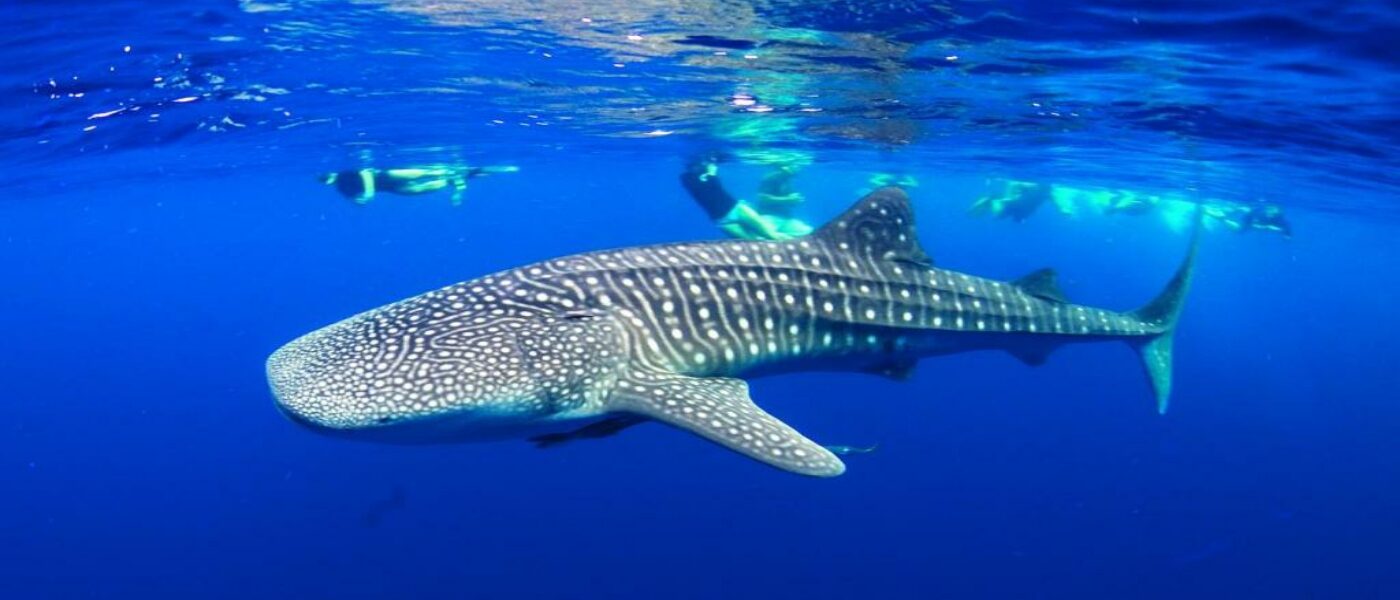
For many travellers, Baa Atoll begins with a single dream: slipping into warm, clear water as manta rays sweep silently through Hanifaru Bay.
When the conditions are right, dozens of mantas can gather inside this small protected bay to feed on plankton concentrated by the currents. It is one of the Maldives’ most extraordinary natural spectacles — but it is also entirely wild. There are no scheduled appearances and no guaranteed sightings.
That makes where you stay particularly important.
Travellers, dive professionals and local operators with extensive experience in Baa Atoll consistently point towards one island for visitors whose main priority is Hanifaru Bay: Dharavandhoo.
Dharavandhoo: the best base for Hanifaru Bay
If mantas are the reason you are travelling to Baa Atoll, Dharavandhoo offers the strongest combination of location, accessibility and flexibility.
The island lies close to Hanifaru Bay, allowing local operators to reach the protected area relatively quickly when conditions are favourable. More importantly, Dharavandhoo has an established community of guesthouses, dive centres and marine-excursion operators who follow manta activity throughout the season.
That local knowledge matters.
Hanifaru Bay is driven by nature rather than a timetable. Currents, tides, wind and plankton concentrations can transform the bay from apparently empty water into a spectacular manta feeding ground — sometimes within a short period.
For this reason, experienced Baa Atoll travellers often recommend staying somewhere that allows you to remain flexible rather than booking a single Hanifaru excursion months in advance and hoping conditions cooperate.
Some operators around Dharavandhoo monitor activity and may respond when mantas are reported in the bay. Being nearby gives you a far better opportunity to take advantage of those moments.
There is another practical advantage: Dharavandhoo has its own domestic airport. You can fly from Velana International Airport to Baa Atoll and arrive directly on the island, avoiding the more complicated transfer arrangements required for some of the smaller islands.
Don’t stay for only one night
One of the most useful pieces of advice from people who know Hanifaru well is also one of the simplest:
Give yourself time.
A traveller visiting for one night might arrive on a quiet day. Someone staying several nights may experience completely different conditions.
There can be days when only a handful of mantas appear — or none at all — followed shortly afterwards by an extraordinary aggregation.
If Hanifaru is an important part of your Maldives holiday, we would suggest allowing at least four nights around Dharavandhoo rather than treating Baa Atoll as a quick overnight stop.
It gives you room for changing weather, different tides and repeated opportunities to visit the bay.
And when the mantas are not there? Baa Atoll still offers superb snorkelling, diving, reefs, turtles, dolphins and remarkably beautiful islands.
Maalhos: quieter, smaller and wonderfully relaxed
Not everyone wants to stay on the most convenient island.
For travellers looking for something quieter, Maalhos is one of the most appealing alternatives.
It offers a more intimate local-island atmosphere while remaining well positioned for excursions around central Baa Atoll, including Hanifaru Bay during the manta season.
The choice between the two therefore comes down largely to priorities.
Choose Dharavandhoo if seeing the mantas is at the very top of your list and you want convenient transfers, several excursion operators and maximum flexibility.
Choose Maalhos if you want Hanifaru to be part of a slower, quieter local-island holiday.
Both can work beautifully. Dharavandhoo simply has the logistical advantage when Hanifaru is the focus of the trip.
What about Kamadhoo?
Further north, Kamadhoo appeals to travellers searching for peaceful beaches, a relaxed village atmosphere and a more unhurried side of the Maldives.
Hanifaru excursions can also be arranged from here.
However, Kamadhoo is farther from the bay than Dharavandhoo, meaning more travelling by boat.
For someone spending a week enjoying the island and hoping to include a Hanifaru excursion, that may not be an issue at all.
For someone flying halfway across the world primarily to maximise the chance of seeing a major manta aggregation, Dharavandhoo remains the more practical choice.
Could I stay at a resort instead?
Absolutely.
Baa Atoll is home to some exceptional private-island resorts, several of which organise guided Hanifaru excursions during the season.
For travellers who want to combine manta encounters with an overwater villa, fine dining, spa treatments and the privacy of a resort island, this can be an outstanding way to experience Baa Atoll.
But it is a different style of holiday.
Staying on Dharavandhoo puts you much closer to the rhythm of local manta tourism. Guesthouses and specialist operators can often offer greater flexibility for travellers who are prepared to make more than one attempt.
It is also considerably more accessible for those wanting to experience the UNESCO Biosphere Reserve without paying Baa Atoll resort prices.
When should you visit?
Choosing the right island is only half of the equation.
Hanifaru’s famous manta gatherings occur during the southwest monsoon, broadly between May and November, when ocean conditions can concentrate enormous quantities of plankton inside the bay.
The heart of the season is generally considered to fall between approximately June or July and October.
Experienced guides also pay close attention to the lunar cycle. Around the new moon and full moon, stronger tidal movement can sometimes create particularly favourable feeding conditions.
But this is worth stressing:
A full moon does not guarantee mantas. Neither does August, September or any particular date.
Hanifaru is not an aquarium. That uncertainty is part of what makes a genuine mass aggregation so extraordinary when it happens.
Snorkelling, not scuba diving
There is another detail first-time visitors sometimes overlook.
You cannot scuba dive inside Hanifaru Bay.
The bay is a protected feeding area and encounters take place by snorkelling or freediving under regulated conditions.
Divers staying in Baa Atoll still have plenty to explore. The surrounding atoll contains excellent dive sites, including manta cleaning stations and reefs, while Hanifaru itself remains one of the world’s great snorkelling experiences.
Imagine floating quietly at the surface as one manta approaches from the blue, followed by another and another, each turning effortlessly beneath you.
That is Hanifaru.
So, where should you stay?
If your trip to Baa Atoll has been inspired by photographs and videos of hundreds of black wings moving through turquoise water, stay on Dharavandhoo.
Spend several nights rather than one. Choose an experienced local operator. Keep your Hanifaru plans flexible. Listen to the guides who watch the currents and the weather every day.
For travellers wanting something quieter, Maalhos is our favourite alternative, while Kamadhoo works particularly well when Hanifaru is only one part of a longer local-island escape.
Most importantly, arrive with the right expectation.
You are not booking a manta show.
You are placing yourself in one of the best locations in the Maldives and waiting for nature to create one. When it does, Hanifaru Bay can deliver an experience that stays with you long after you leave Baa Atoll.